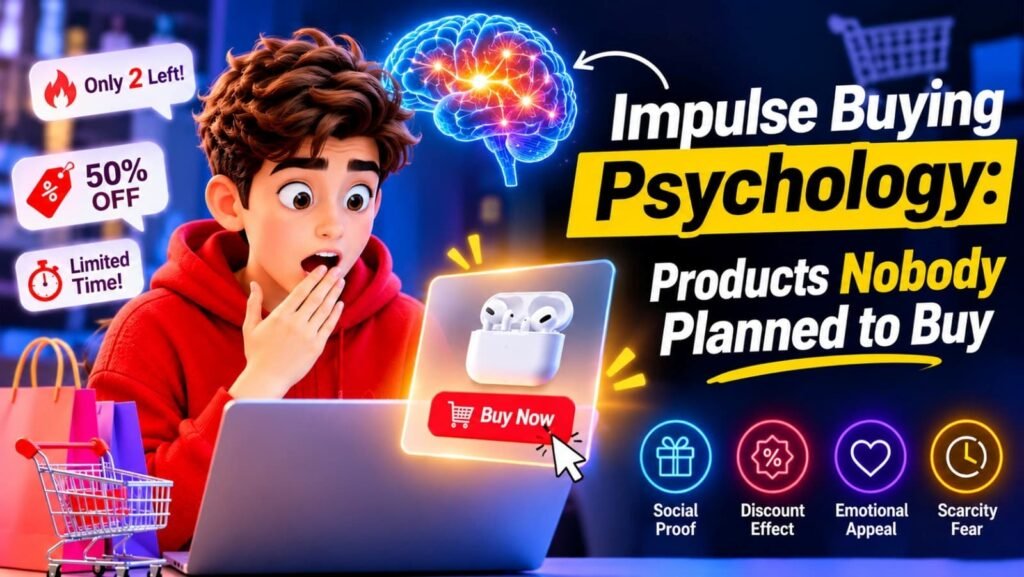
You open a shopping app to buy a phone charger. Twenty minutes later you are checking out with a jacket, a skincare product and a flash‑deal add‑on you did not know existed. That is not a lack of willpower. Impulse buying psychology is at work and impulse buying psychology is built deliberately into online stores through emotional triggers, discounts, urgency and personalized recommendations.
This guide covers the seven reasons behind buying why these reasons, behind impulse buying are so effective and how both marketers and shoppers can use that knowledge responsibly.
What Is Impulse Buying Psychology?
Impulse buying is when someone buys a product without having planned to do before. It usually happens because of excitement, curiosity, a nice deal or a strong feeling of because they really need the item.
For example you go to a store to buy shoes. As you look around you see a handbag that’s, on sale. You didn’t need it. The deal makes you interested and you end up buying it. Digital marketers look into the psychology of buying to find out how people shop and how online stores can help customers find products more easily.
This is an example of buying something without even planning. Digital marketers study this kind of behavior to learn how people shop and how online stores can make it easier for customers to discover products.
How Does Emotional Marketing Shape Impulse Buying Psychology?
People do not always buy because they need something. Often they buy because a product makes them feel happy, confident, excited or special.
A perfume advertisement, for instance, invites you to imagine feeling more confident and stylish. You may buy it even if you already own one. Brands connect products with feelings and desires, and that emotional link can turn a casual visit into a purchase.
How Do Discounts Influence Buying Decisions?
Messages like “20% Off,” “Buy One, Get One Free” and “Special Offer” make shoppers feel they are getting a valuable deal. In impulse buying psychology, this is called perceived value: how valuable an offer appears, regardless of whether you needed the item.
A customer who sees a T-shirt on sale may buy it to “save money,” even with a closet full of shirts. The catch is simple: spending less on something you do not need is still spending money.
FOMO Marketing and Impulse Buying psychology: How Urgency Works
The fear of missing out (FOMO) is when someone feels like a chance to do something might be gone if they don’t act right away. Online shops use words like “Limited Stock ” “Offer Ends Tonight” and “Last Chance to Buy” to make people feel this way.
Think about a watch that has a timer counting down on its sale price. A person who was just looking around might decide to buy it away instead of waiting and possibly missing the deal.
Important point, for people who market things: the sense of urgency should come from deadlines and correct numbers of items left. Using timers and making up limited availability can hurt trust and might break the rules for ads.
How Do Personalized Product Recommendations Increase Sales?
Sections such, as “You May Like ” “Recommended for You ” and “Customers Also Bought” show personalized marketing. Personalized marketing uses your shopping activity and interests to offer items.
After you buy a Mobile phone for example a store may suggest a case, a screen protector or wireless earbuds. You had not planned to buy them. The suggestions make them seem useful. When done well personalized marketing uses impulse buying ideas to improve the shopping experience. Helps businesses offer truly relevant products.
Social Proof: Why Reviews Make Us Buy
People feel more confident about a product when they see that others like it. This is called proof. Online stores show customer reviews, star ratings, stories from customers and “bestseller” signs to show how other people feel about the product.
Imagine you are looking for a water bottle and you see one that has hundreds of reviews. Those ratings can make you choose it even if you had planned to buy something. Real reviews help people make choices and create trust in a brand, over time.
How Do Website Design and Product Images Affect Impulse Buying?
High-quality images, colors, simple designs and short videos of products help people notice the products more and imagine having them.
A bakery website that shows a decorated birthday cake can change someone who is just looking into someone who is ready to buy for a special event. Great visual marketing is a part of how people decide to buy on a whim. It helps customers learn about a product and look at things that go with it as long as the pictures show exactly what they will get.
The Free Shipping Threshold: Why We Add Small Extras
Many stores give delivery when you spend a certain amount. This trick plays on the way people think and makes them want to buy more.
Imagine your cart has a total of 1800 rupees and free shipping starts, at 2000 rupees. You might buy an item that costs 300 rupees just to get free shipping. You wanted to save on delivery. Ended up paying more overall. This is a way businesses encourage customers to spend more.
Adding items can be helpful if they are needed but only when they solve a real problem. Businesses use these methods to increase the amount customers spend.
Digital Marketing Techniques That Use Consumer Psychology
Marketers use these methods to attract shoppers and influence their decisions:
- Personalized recommendations: suggest products based on customer interests.
- Content marketing: use helpful articles, videos and research-backed guides to attract potential buyers.
- Retargeting ads: show relevant ads to people who previously visited a site or viewed a product.
- Limited-time promotions: offer genuine discounts for a defined period.
- Email marketing: send relevant updates and offers to interested subscribers.
- Social proof: display authentic reviews and ratings to build trust.
These strategies can lift conversion rates and engagement. The strongest approach, however, serves customer needs instead of simply encouraging unnecessary spending.
How to Avoid Impulse Buying Online
Understanding impulse buying psychology makes the tactics easier to resist. Try these steps:
- Ask the key question. Before adding an extra item, ask: “Do I really need this, or am I reacting to a discount, an ad or fear of missing out?”
- Wait 24 hours. Move the item to a wishlist and decide the next day.
- Check your cart total, not the savings. A discount is only a saving if you were going to buy the item anyway.
- Skip the free shipping trap. Compare the shipping fee with the price of the extra item.
- Limit triggers. Unsubscribe from promotional emails and turn off sale notifications.
FAQ
-
What is impulse buying psychology in simple words?
Impulse buying means purchasing something on the spur of the moment without planning it, usually because of emotion, curiosity or an attractive offer.
-
Why do people impulse buy online more than in stores?
Online shopping removes friction. Saved payment details, one-click checkout, constant recommendations and time-limited offers make it easy to buy before you have time to think.
-
Is using FOMO in marketing ethical?
It is ethical when the urgency is real, such as a genuine deadline or accurate stock levels. Fake countdown timers and made-up scarcity mislead customers and harm trust.
-
How do free shipping thresholds increase order value?
Shoppers who are close to the minimum often add another item to qualify, which can cost more than the shipping fee they were trying to avoid.
-
How can businesses use consumer psychology responsibly?
Focus on relevant recommendations, honest discounts, authentic reviews and accurate product images. These build repeat customers instead of one-time, regretted purchases.
Conclusion
Impulse buying psychology shows that shopping decisions are shaped far more by emotion, FOMO and personalization than by pure need. For digital marketers, understanding these factors means building better customer experiences and increasing sales honestly. For shoppers, recognizing the tactics makes it easier to pause and make value-driven choices.